ORDER’S UP!
A tenant-activation microsite that turns everyday office essentials into gifts people can personalise.
- Pacific Place Offices
- 2024
- UI/UX Designer
- Figma

Overview
ORDER’S UP! was a 2024 tenant activation for Pacific Place Offices. A limited-time pop-up and a companion digital experience invited tenants to choose an everyday item (an electronics pouch, a wellness bag, a work folio) and personalise it, so redeeming it felt like a creative moment rather than a generic giveaway.
Problem
Tenant activations often fail when redemption is confusing or slow: people are busy, stock is limited and the branding can feel like an afterthought. The flow had to be fast, playful and clear for a passing audience, and still support operational needs such as managing choices, confirming details and guiding pickup.
Approach
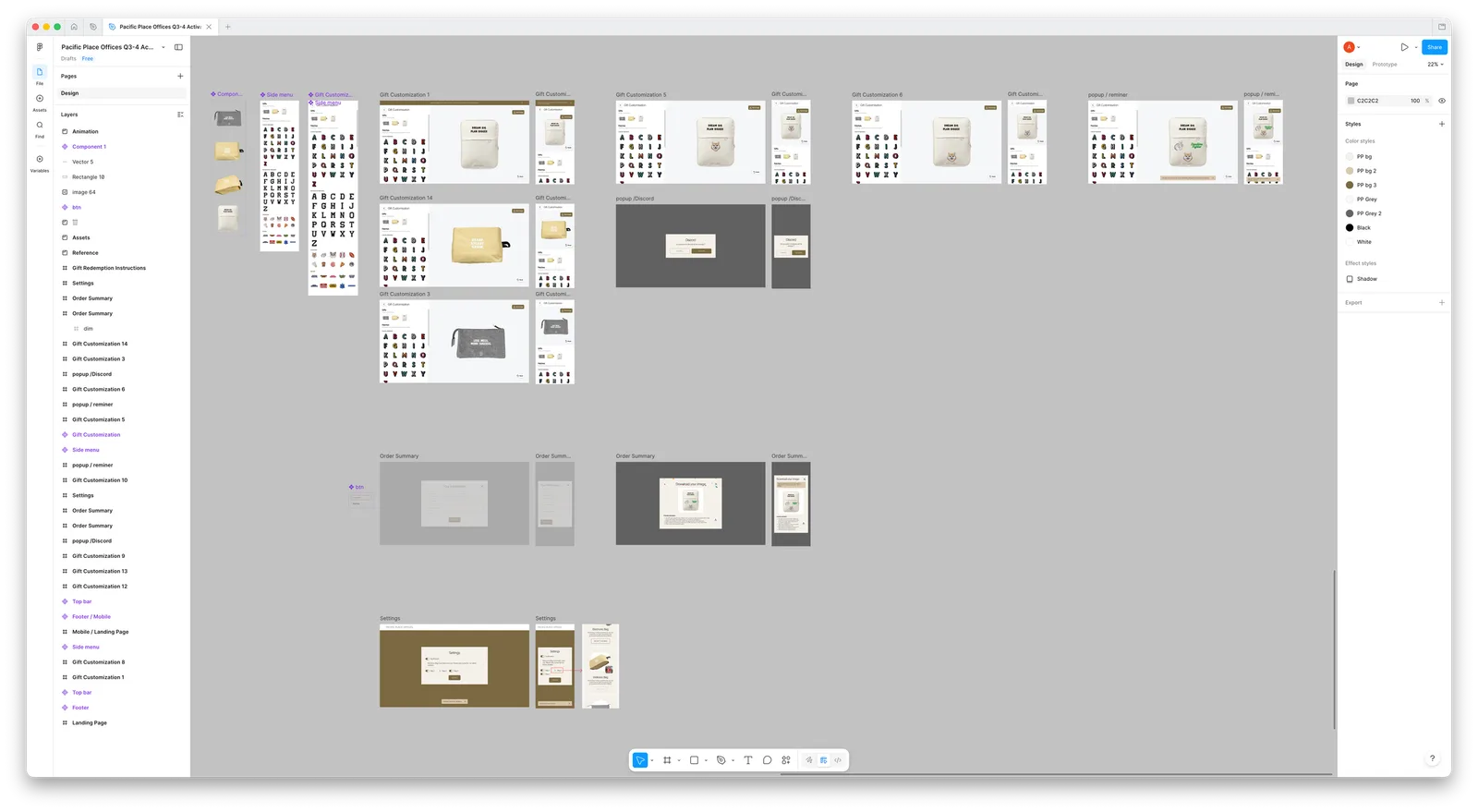
I mapped the redemption journey end to end, from discovery through customisation to confirmation, and turned it into a responsive microsite: landing page, multi-step gift customisation, order summary, settings and side navigation, and supporting overlays.
Redemption instructions and micro-interactions were designed to reduce friction, and shared layouts and components kept the experience consistent across devices and on-site moments.
Solution
A minimal, branded microsite supported the pop-up, with an easy landing page and a step-by-step customisation flow. Tenants could explore gift options, personalise their pick, review an order summary and get clear redemption instructions, which turned a logistical exercise into a small office upgrade.
Lessons
Designing for a temporary, physical activation showed the value of clarity and constraint. The interface had to explain itself, cope with changing stock and be pleasant within seconds.
Next time I’d add instrumentation and on-site testing earlier, to measure where people drop off and fix the most common failures before launch.